Dekoobjekte & Wohnaccessoires
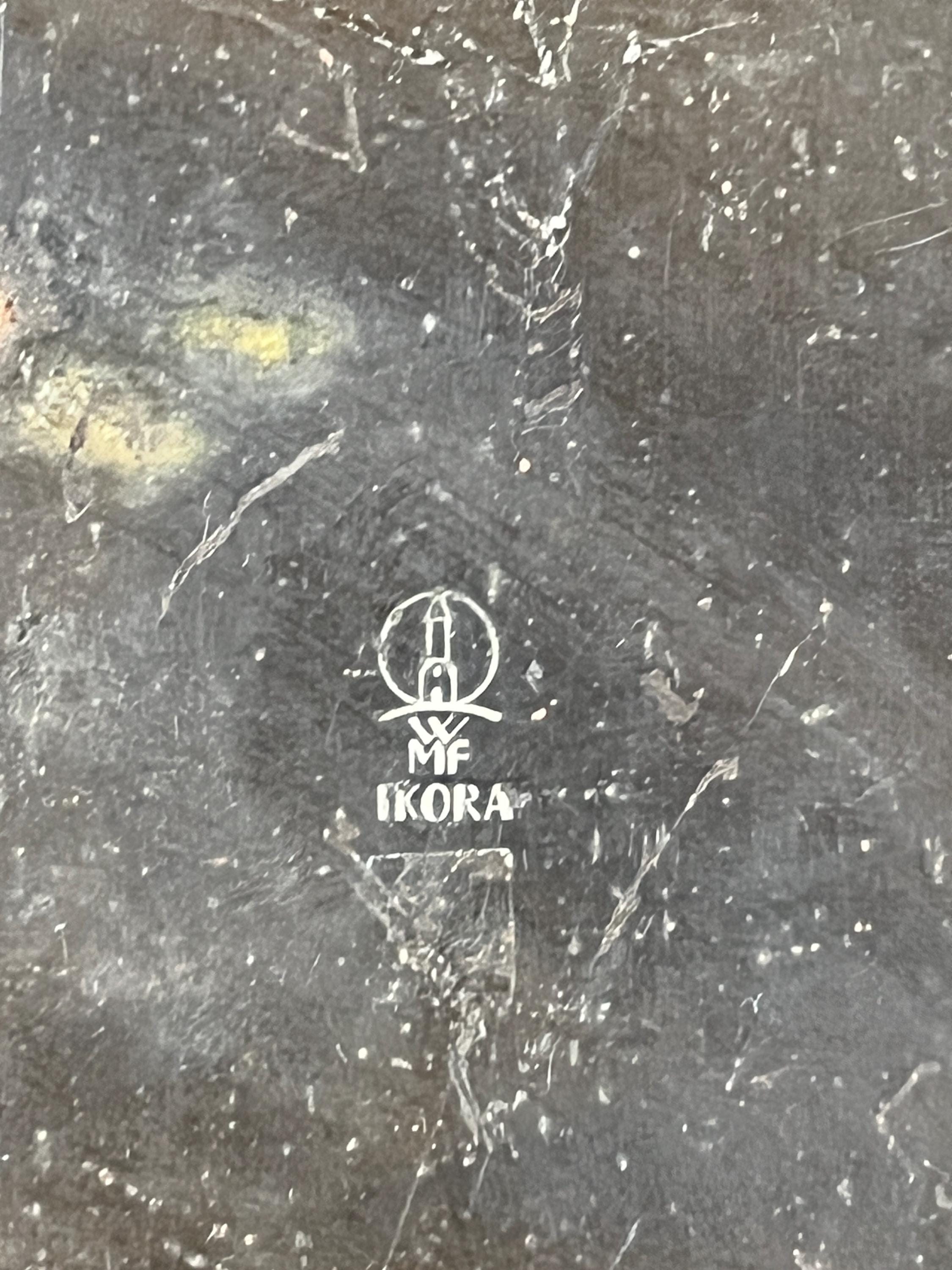
Metal bowl I WMF Ikora bowl by Paul Haustein I Masterpiece of metal art I 1930s Bauhaus
$326.81
-
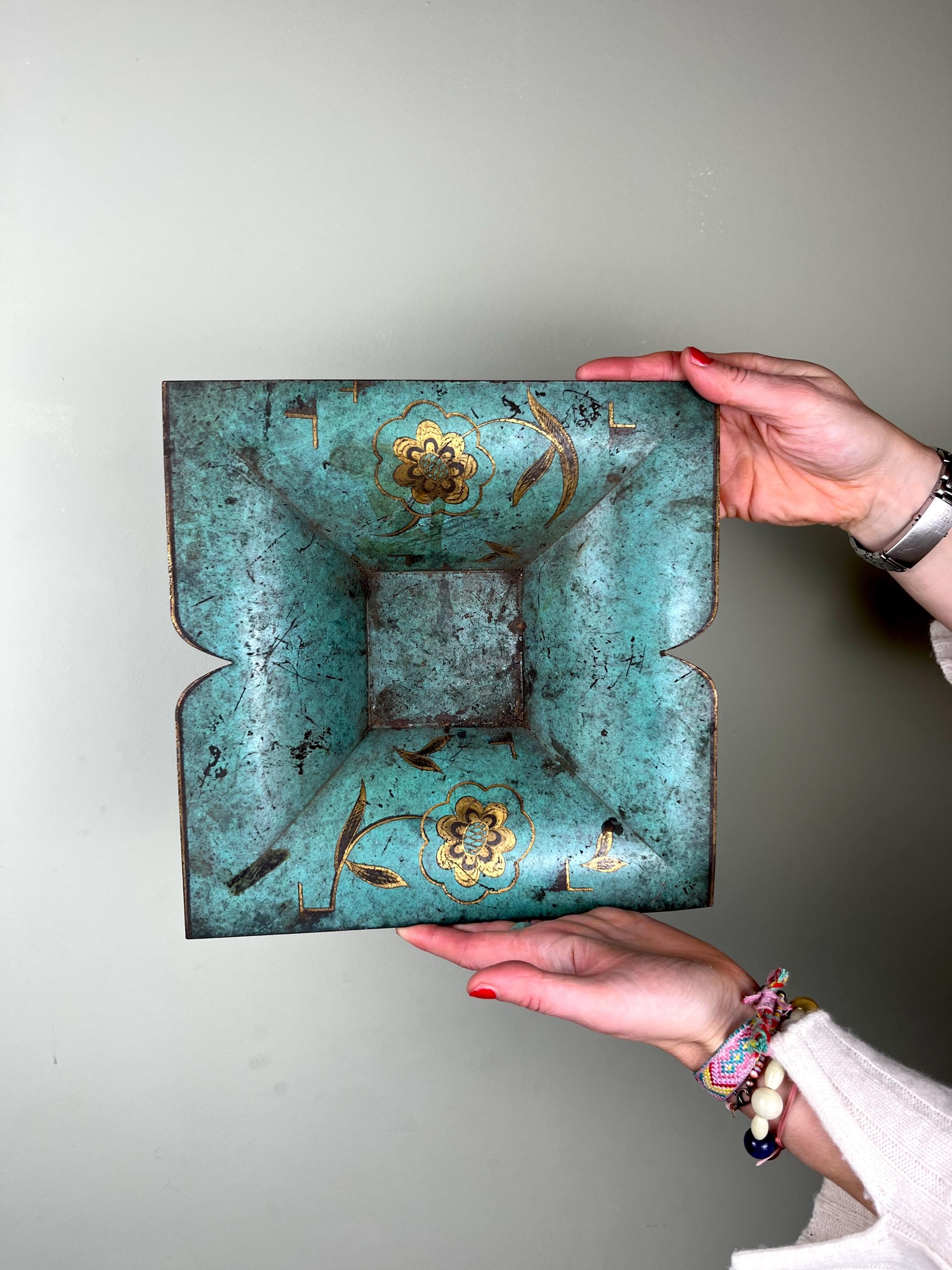
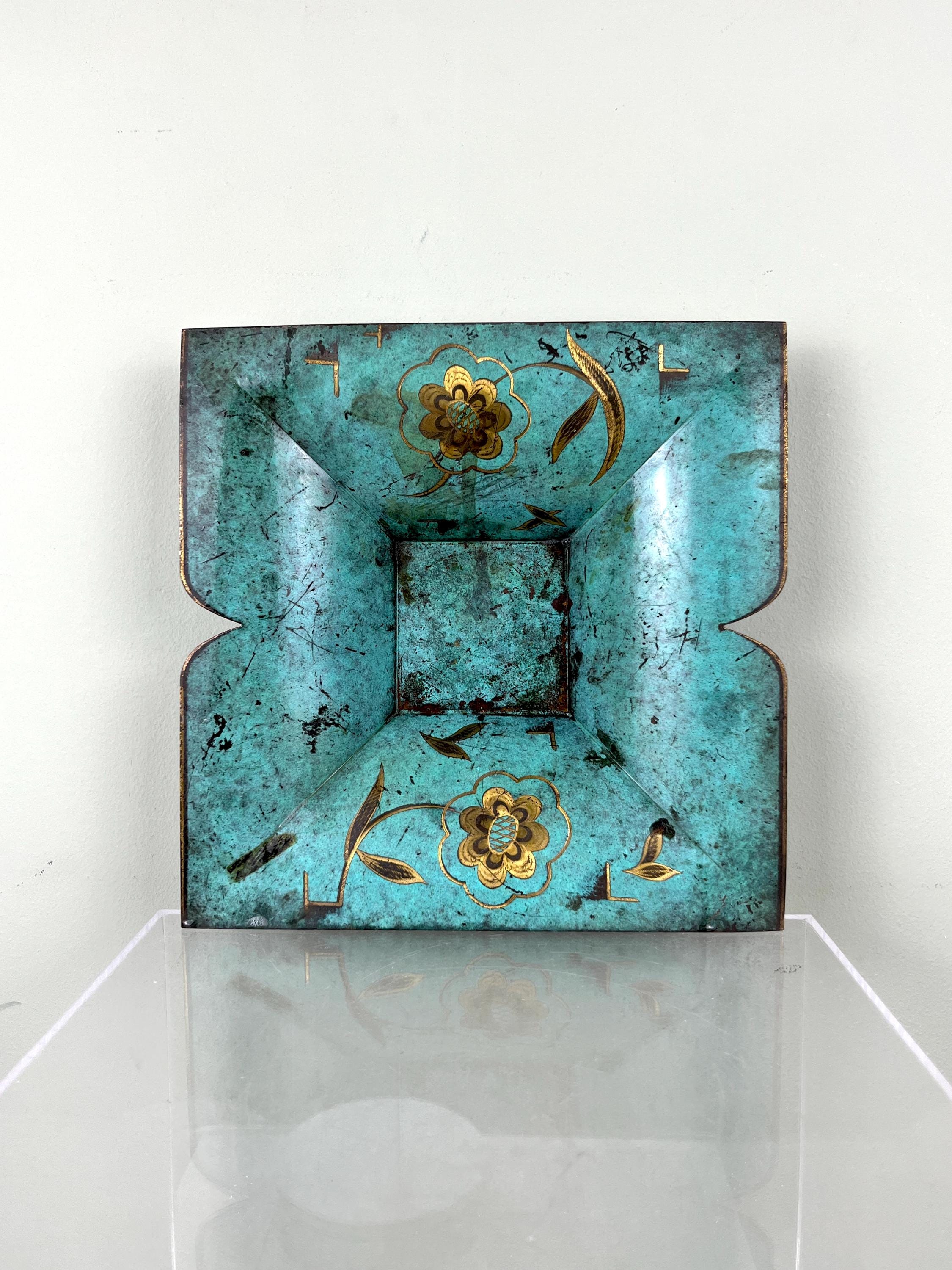
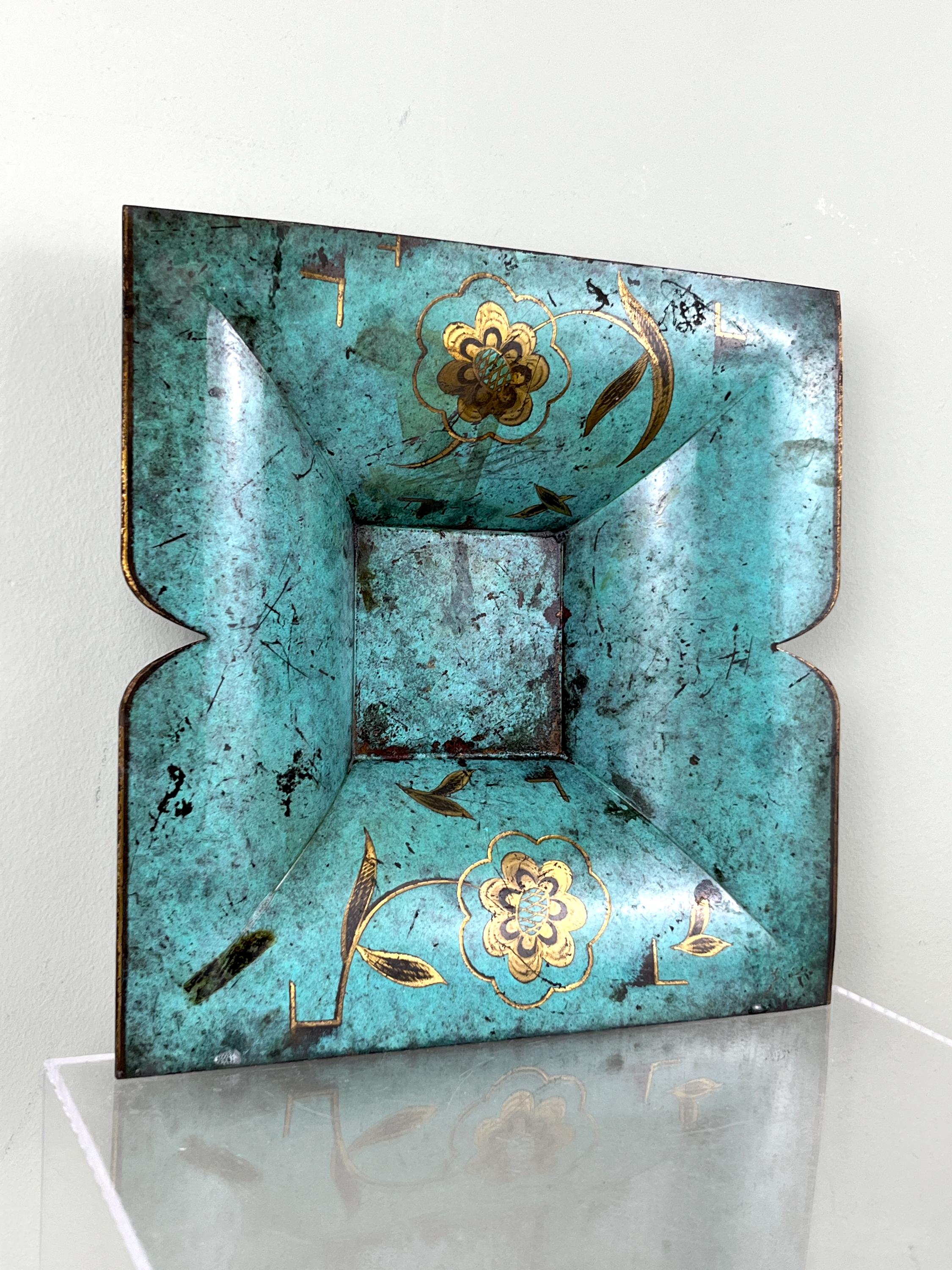
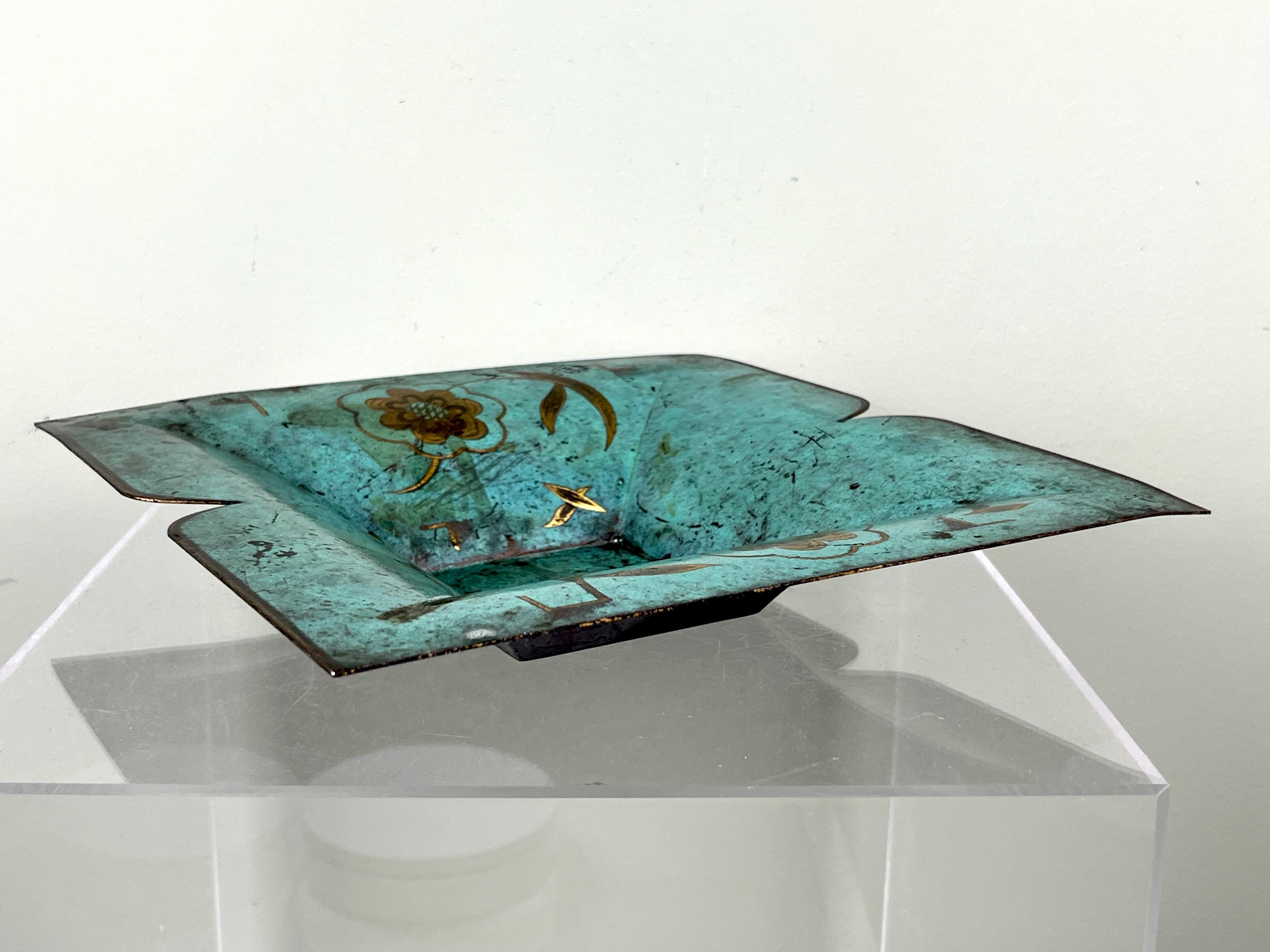
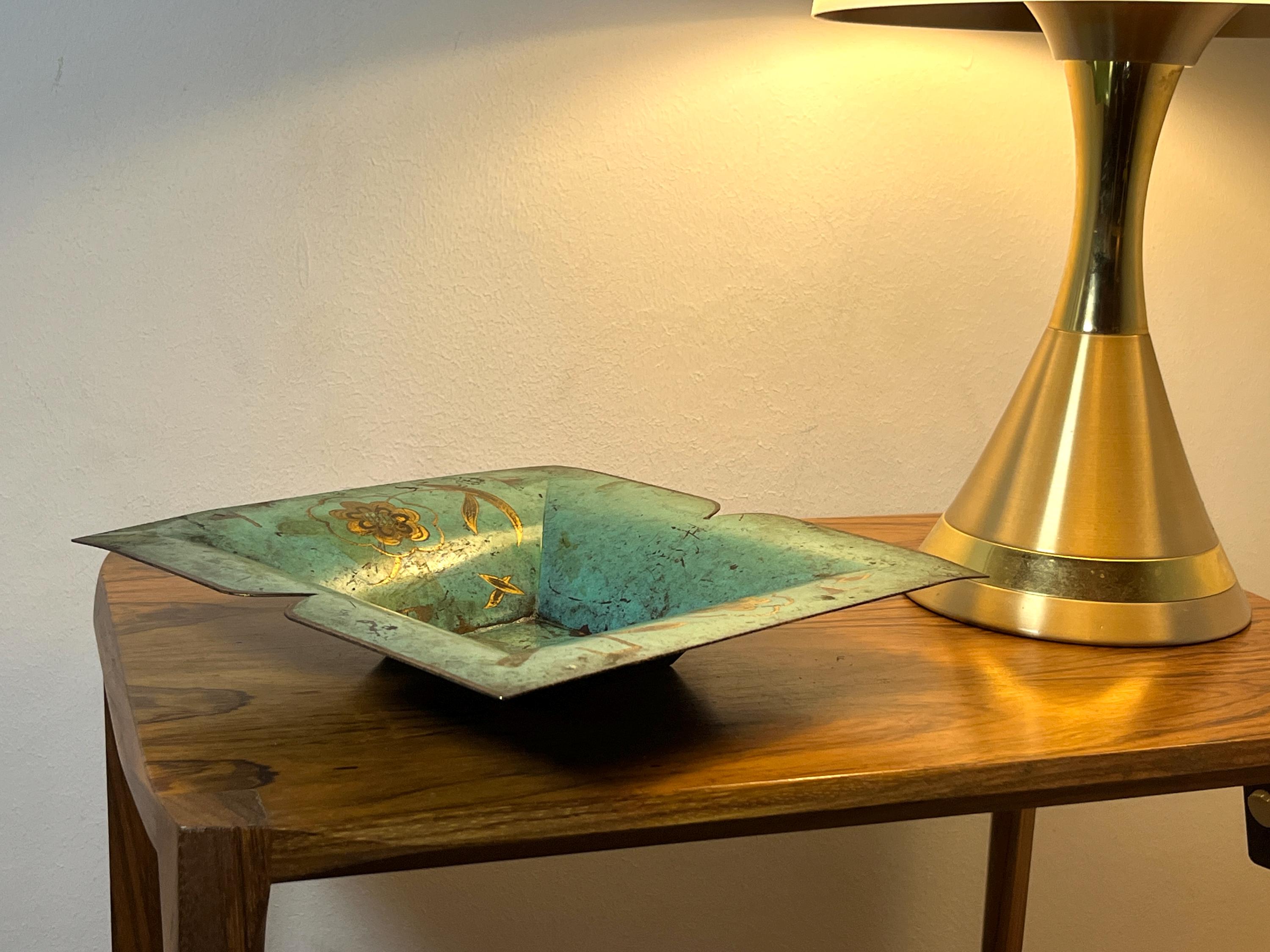
DetailsThe WMF Ikora bowl by Paul Haustein is a masterpiece of metal art from the 1930s – characterized by modern design, artistic patination, and decorative refinement.
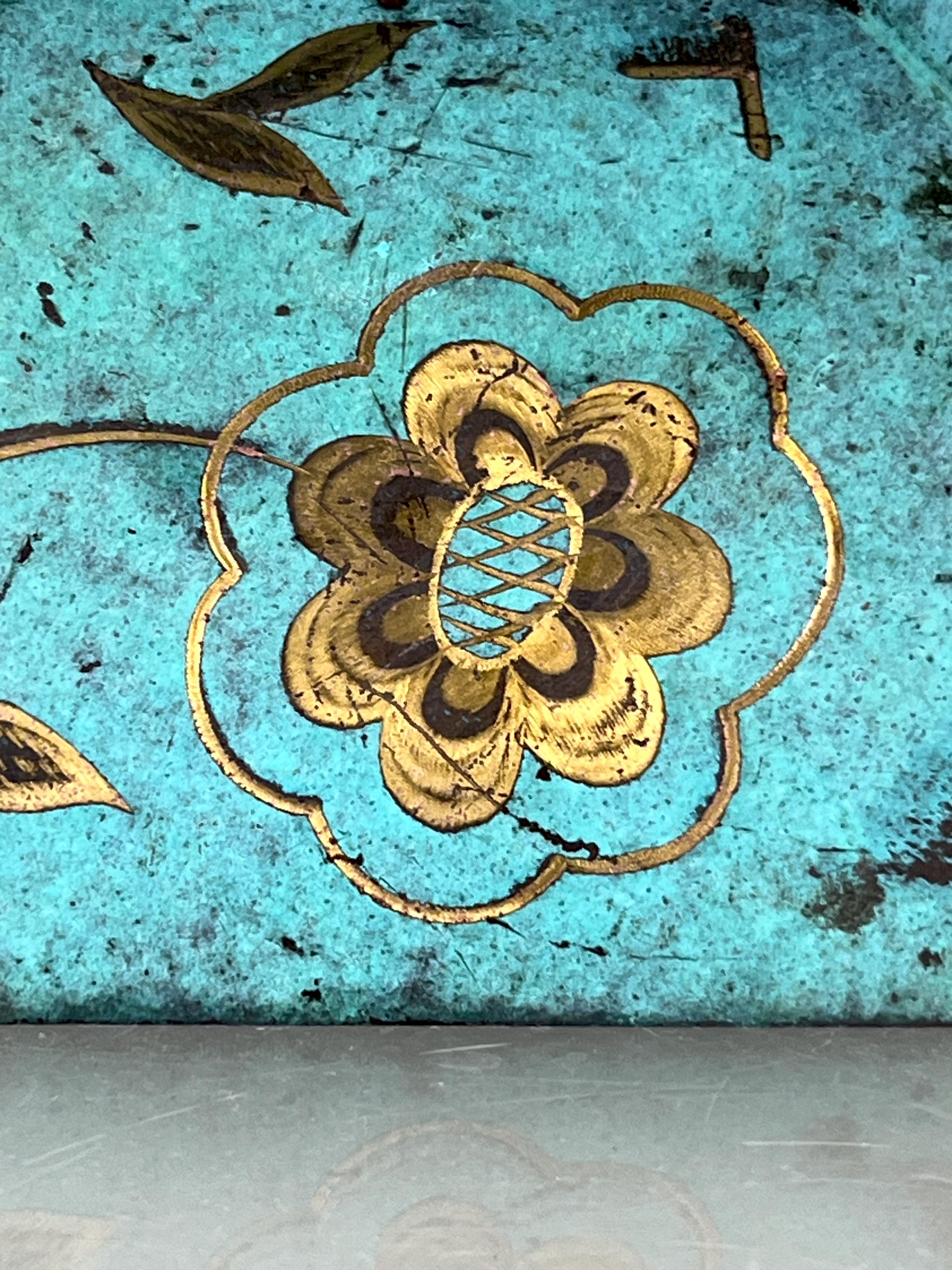
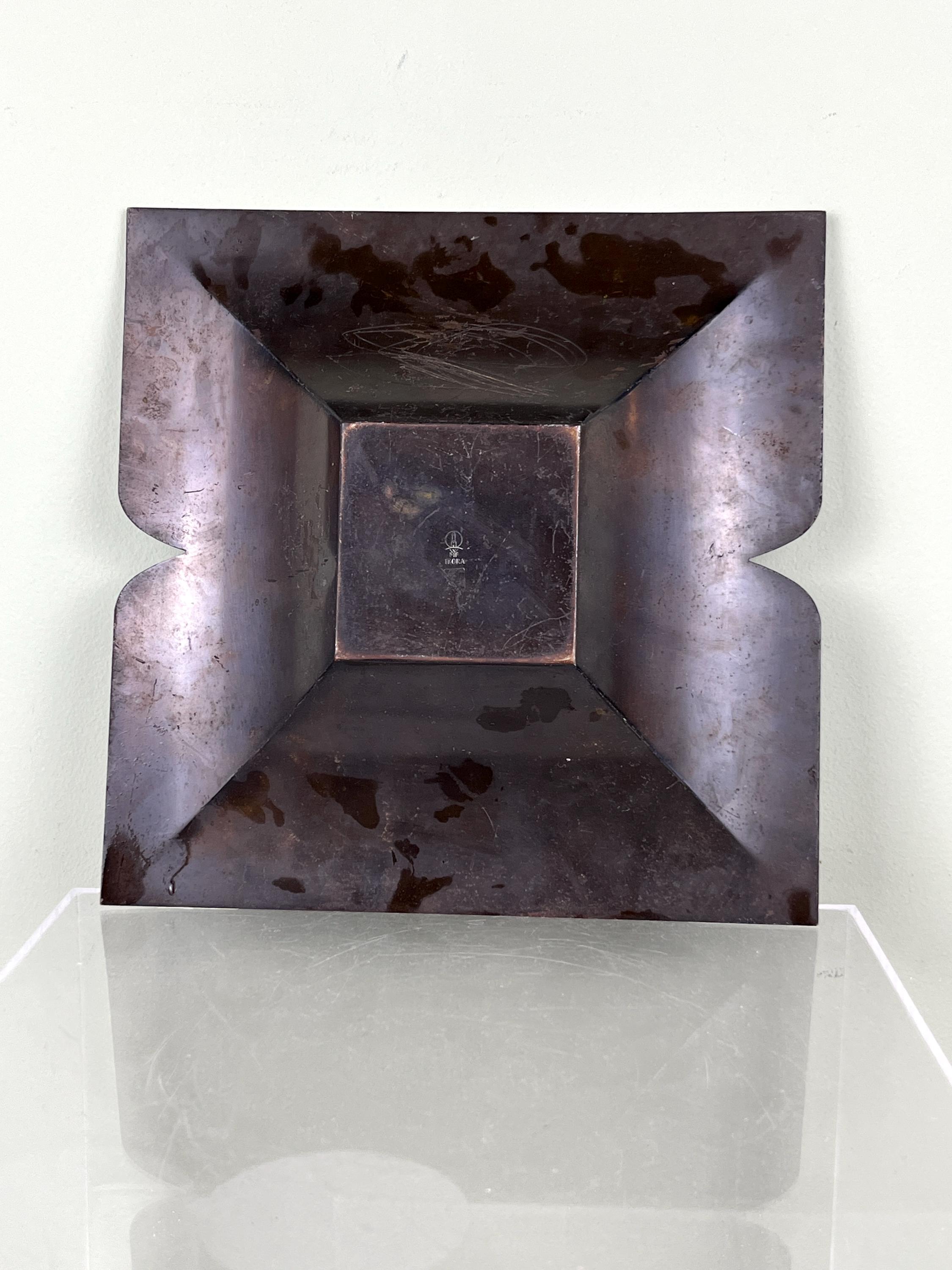
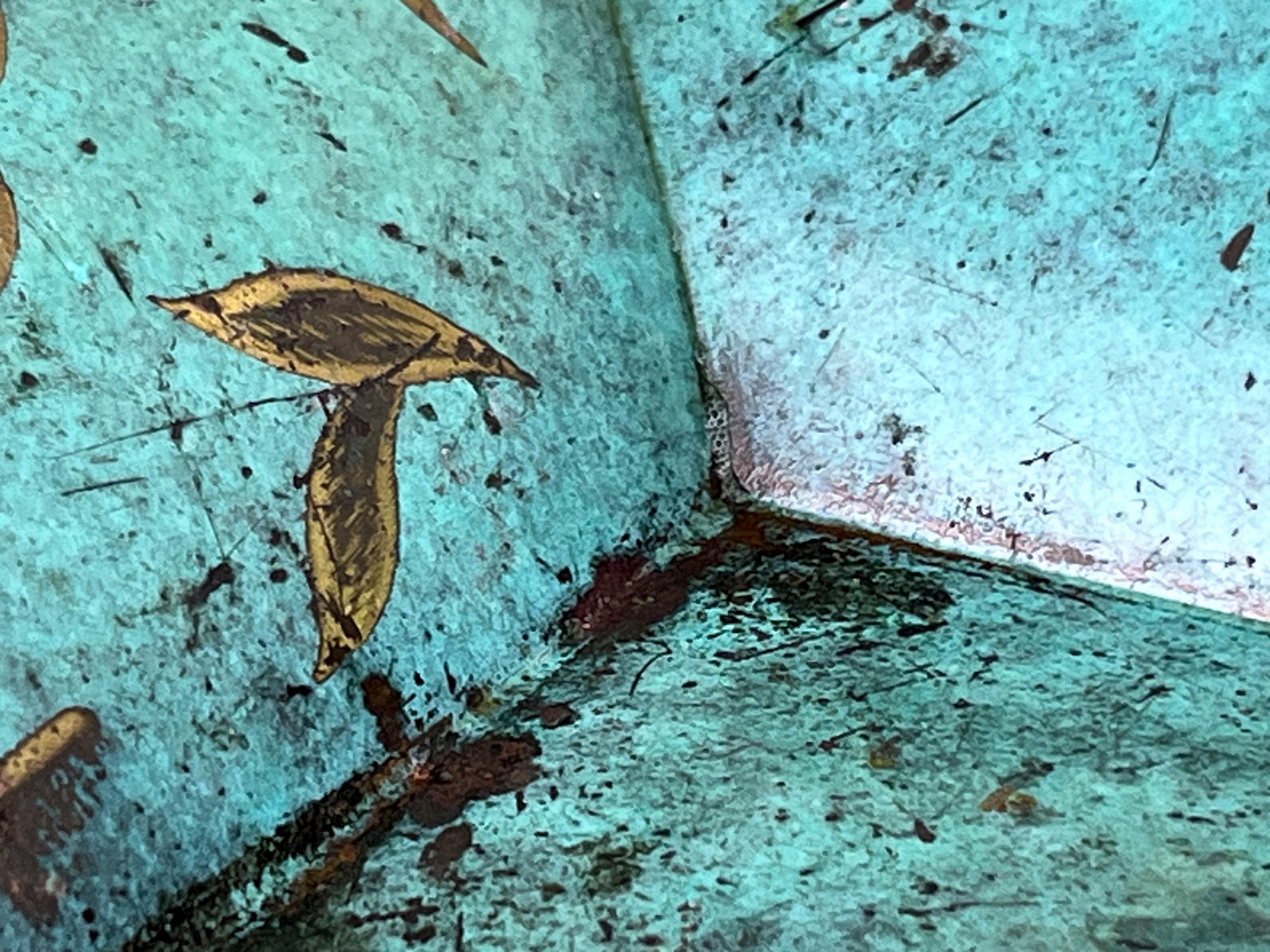
Condition: original used condition - slight rust inside
Weight: 700 g, width 26.5 cm
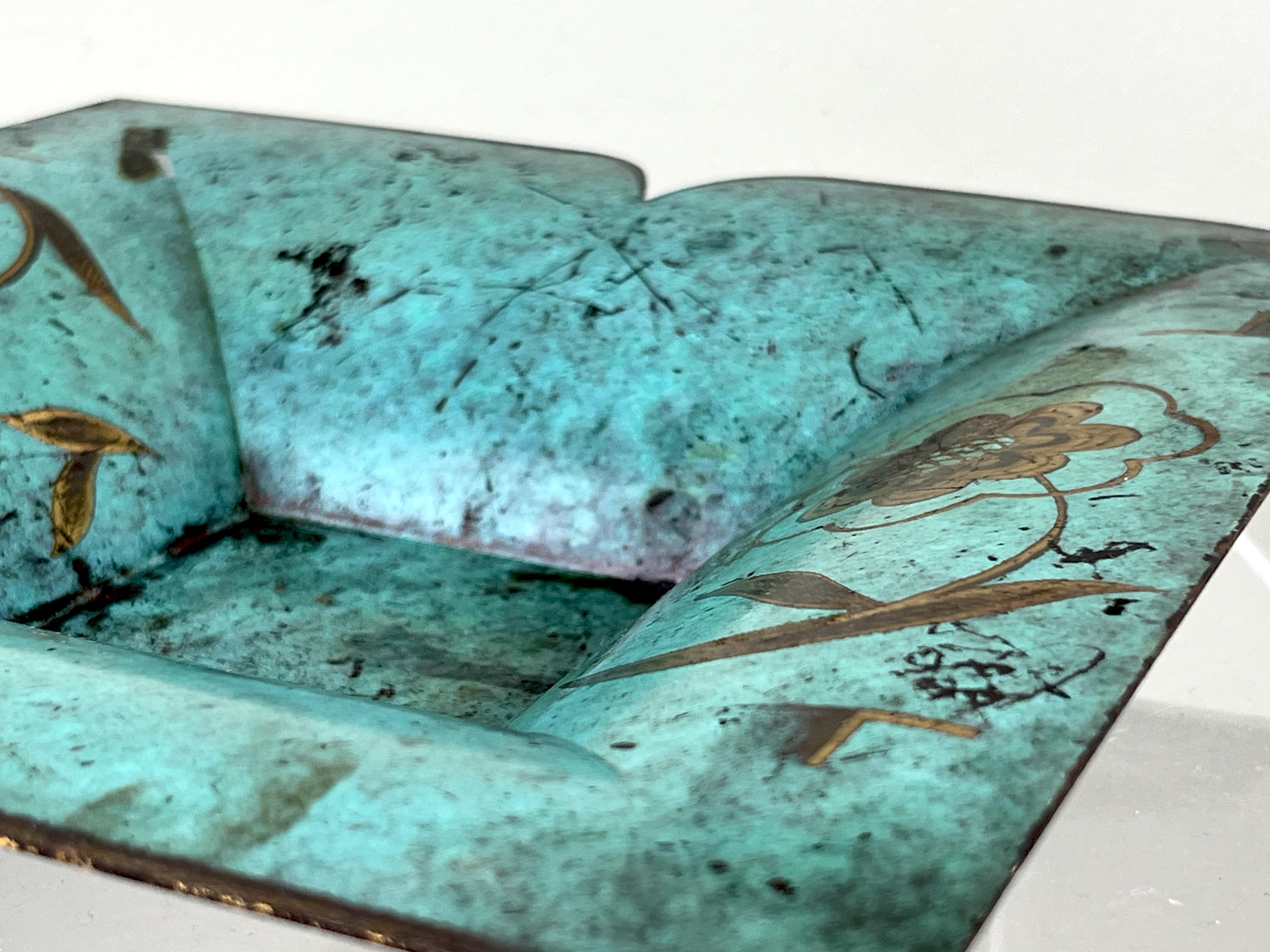
The square bowl with slightly raised edges and indented corners bears the characteristic signature of Paul Haustein, one of the most important designers at the Württembergische Metallwarenfabrik (WMF). The surface is treated with the Ikora technique – an innovative finishing method that creates a vibrant, marbled look through fire patination, engraving, and inlay. Particularly striking are the floral motifs in gold and brown tones, which contrast vividly with the turquoise-black background. This color choice, especially the celadon green, was typical of Haustein's work and lends the bowl a noble, almost mystical aura.
Background to the Ikora technique
The Ikora technique was developed at WMF in the late 1920s and named after the tropical plant Ixora. The goal was to transform metal objects into unique pieces through controlled coloring and artistic processing. The technique combines:
Fire patination for vibrant color gradients
Electroplating and engraving for depth and structure
Inlays and enamel for decorative details
These processes made Ikora products sought-after collector's items—from vases to boxes to bowls like this one.
Paul Haustein – The Designer
Paul Haustein (1880–1944) was a German artist and designer who worked for WMF from the 1920s onward. He significantly shaped the aesthetics of modernism and New Objectivity in metal design. His works are characterized by:
clear geometric shapes
artistic surface treatment
Combination of functionality and decor
Haustein was not only a designer but also a professor at the Stuttgart School of Applied Arts. His works were exhibited internationally and are now considered significant contributions to European design history. -
Shipping & Policies
Related Products