Vasen & Keramik
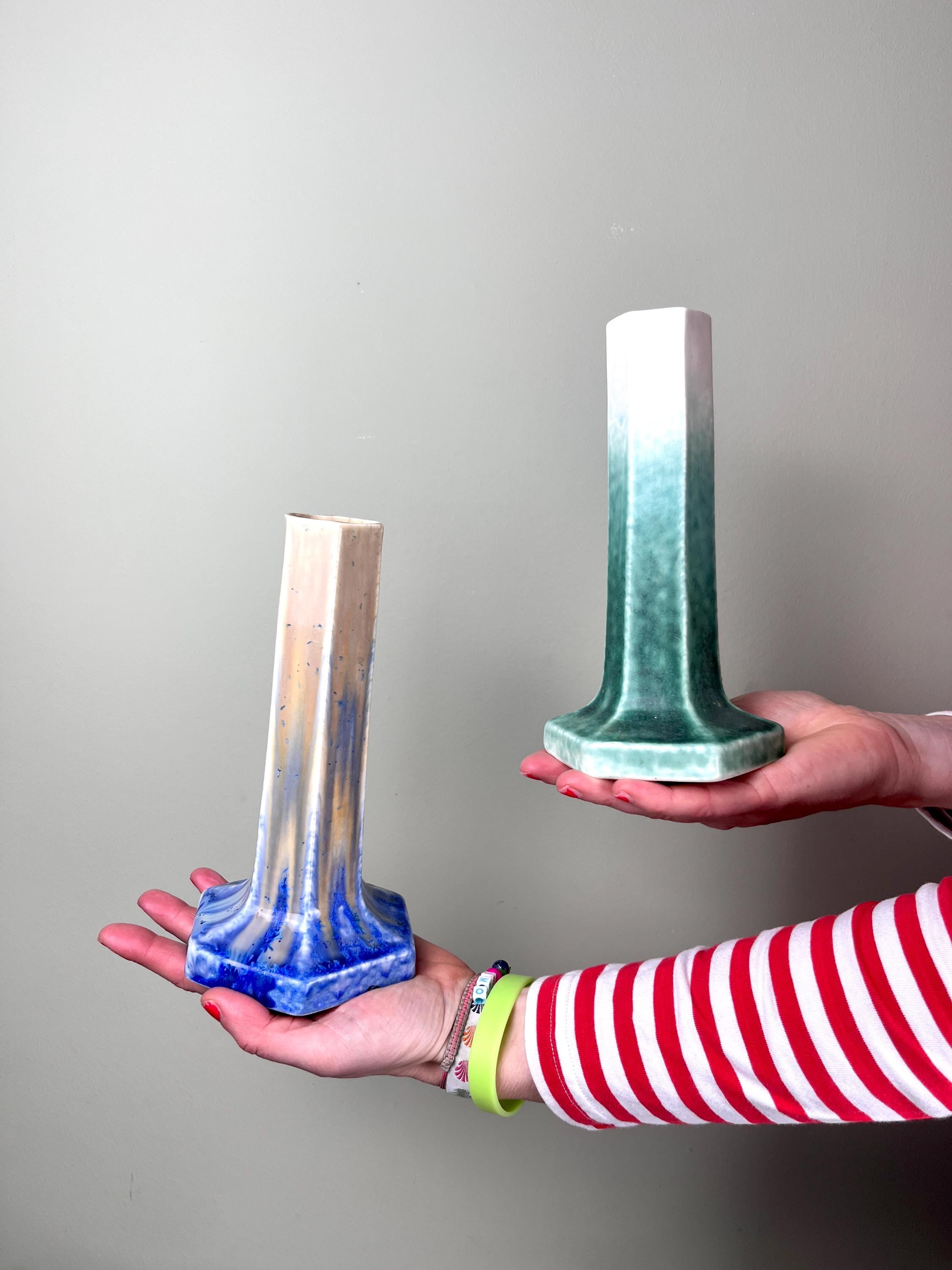
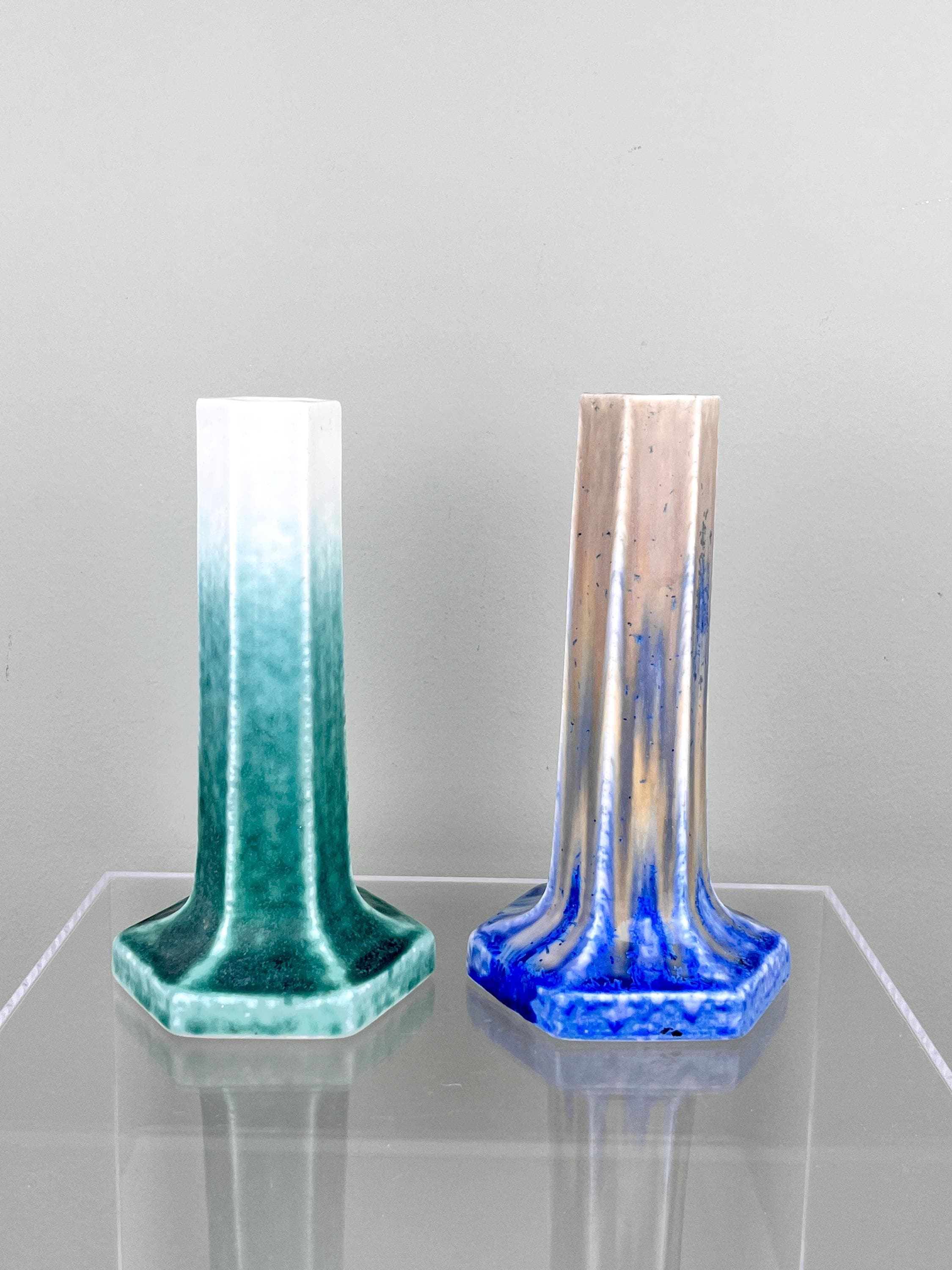
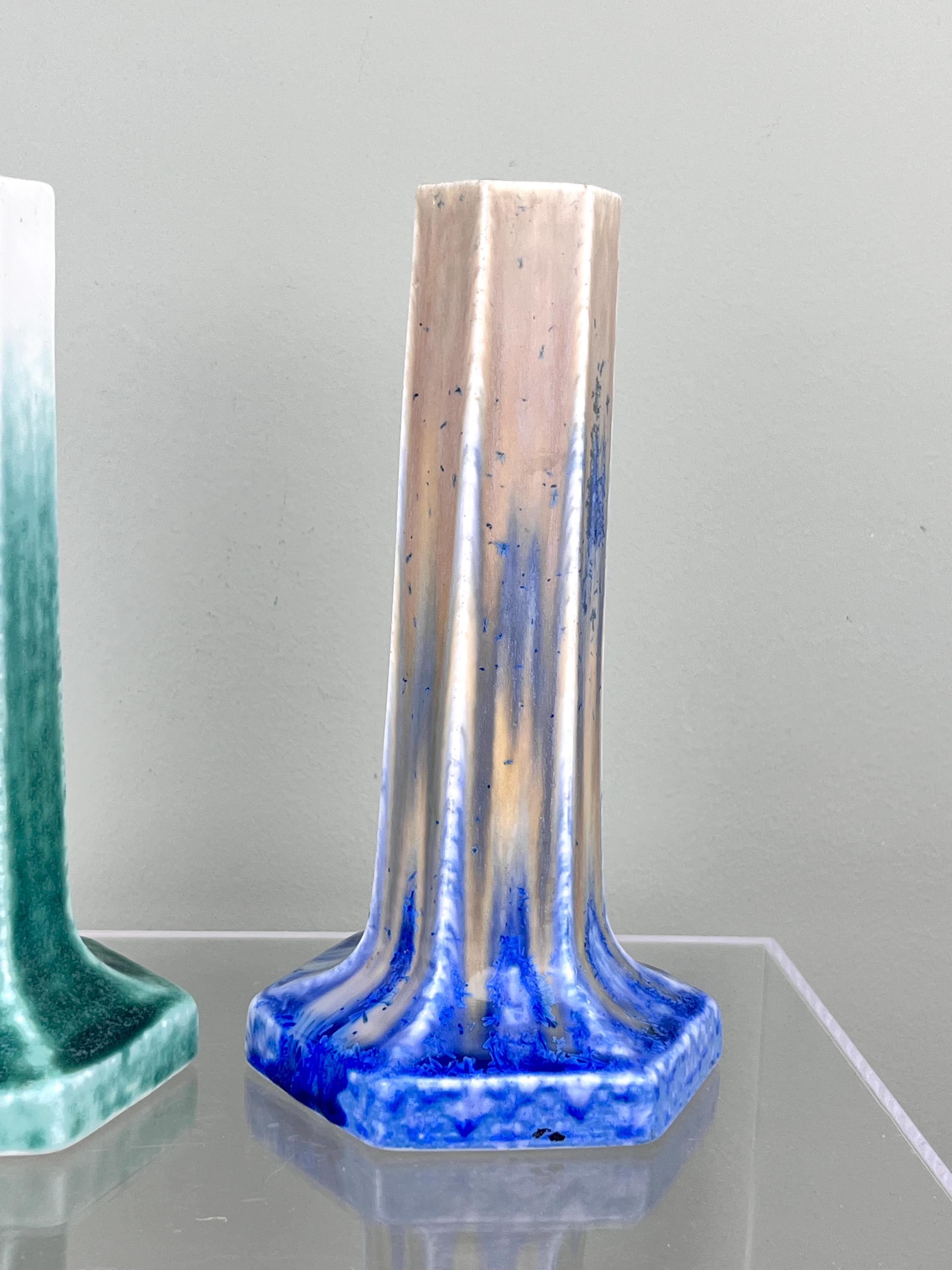
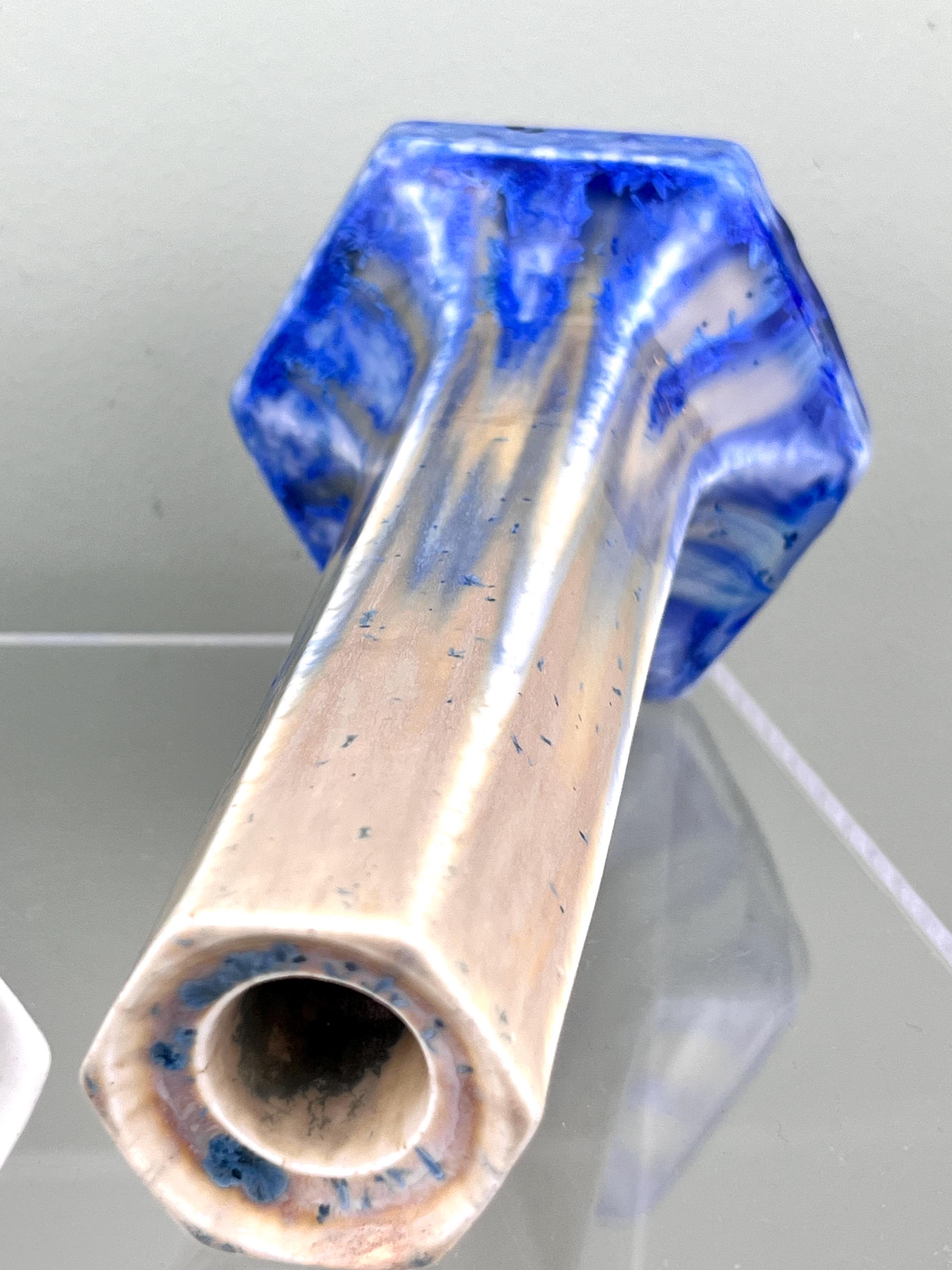
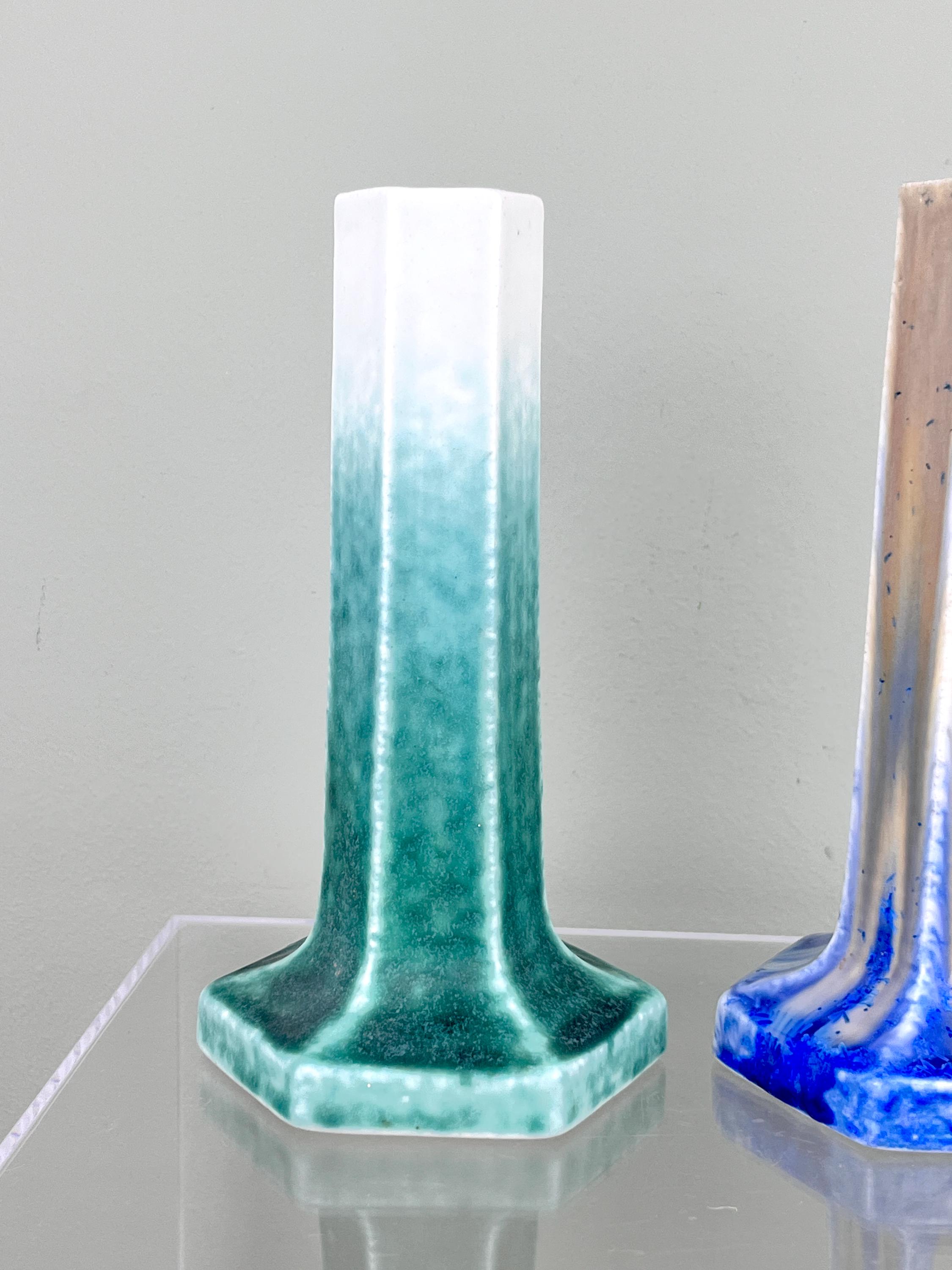
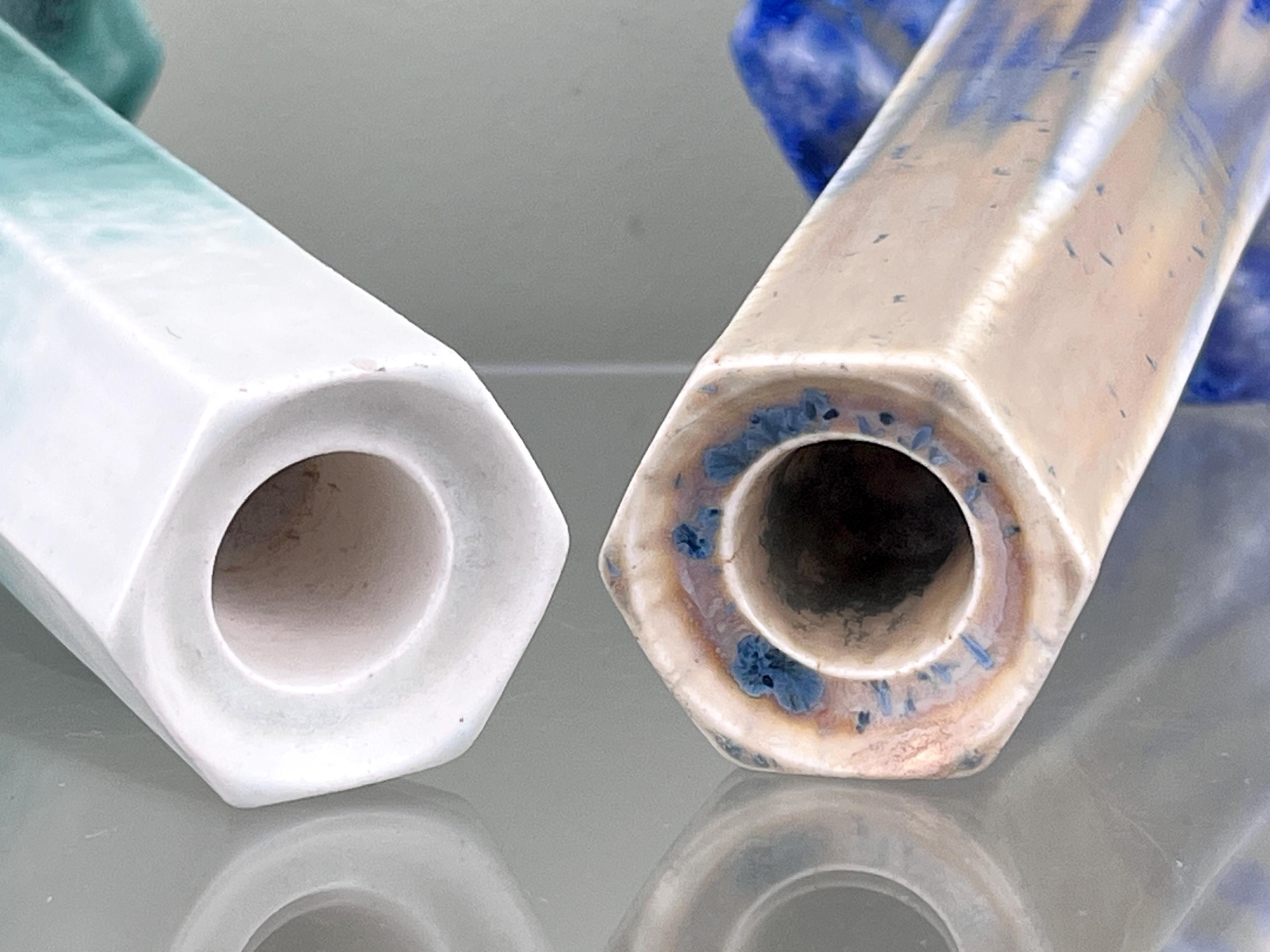
Set of 2 Ruskin Candlesticks Ceramic I Candle Holder Art Deco Candle Holder - Ruskin Pottery Candle Holder 1930s Made in England Signed
$210.85
-
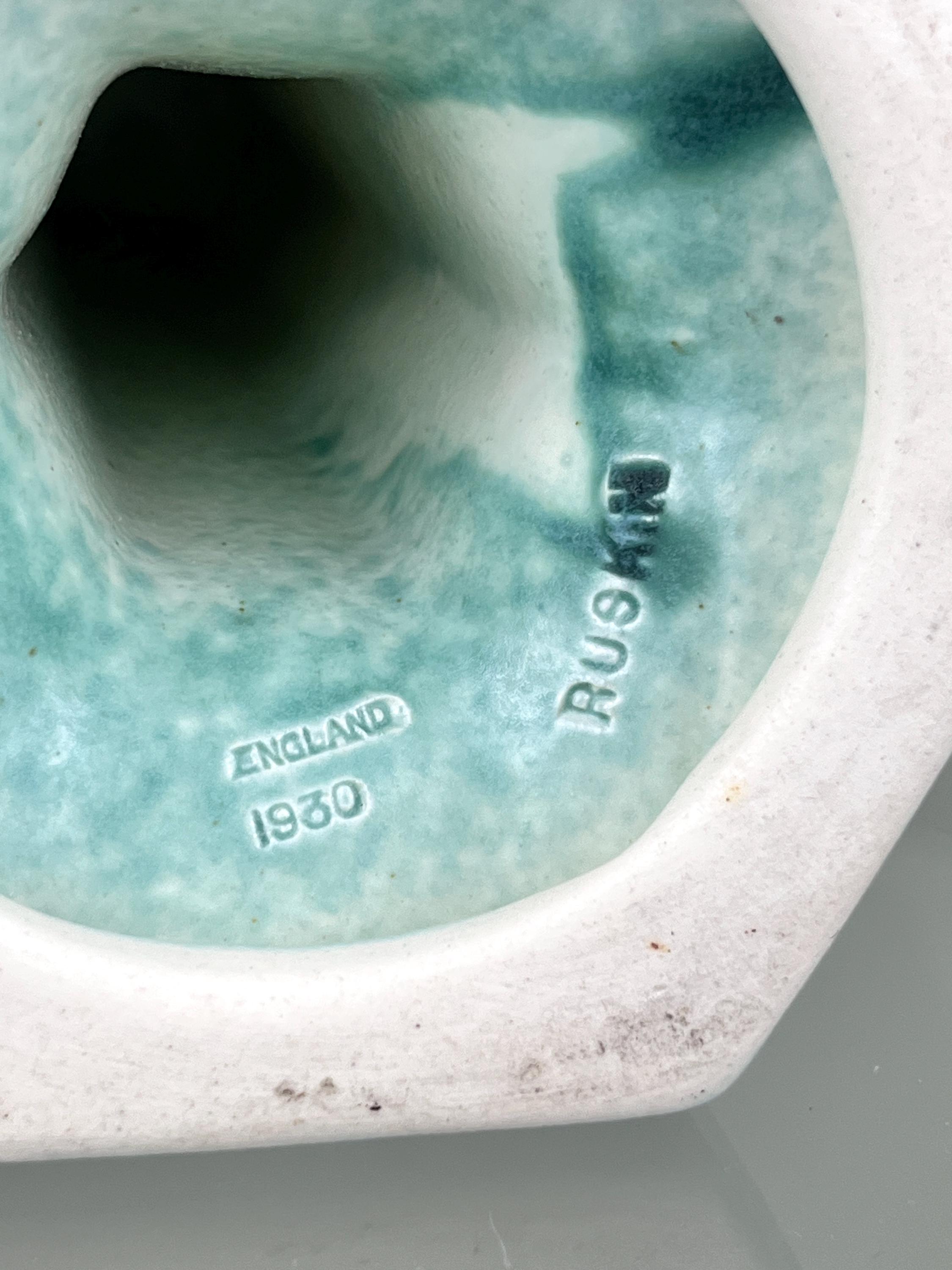
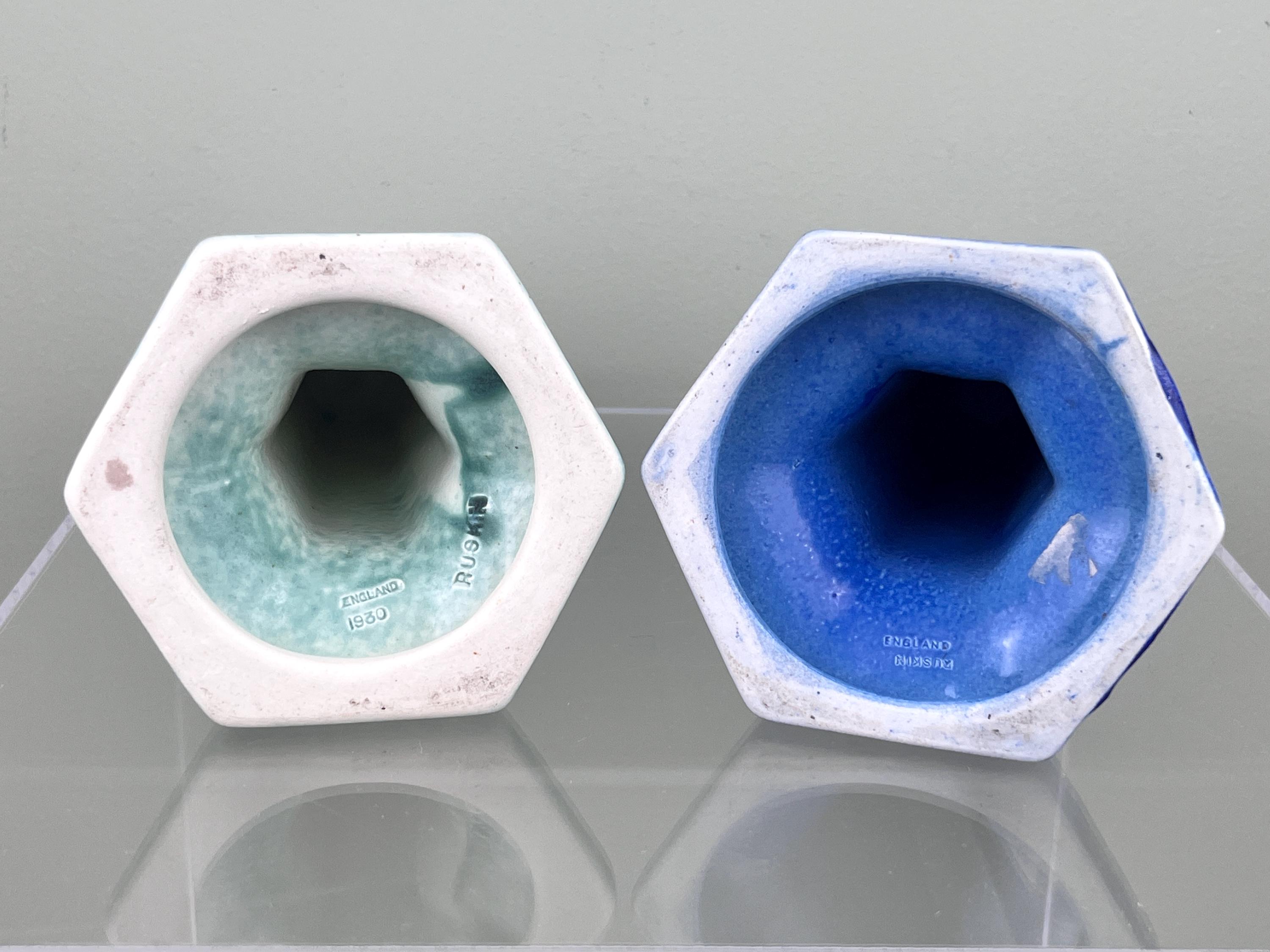
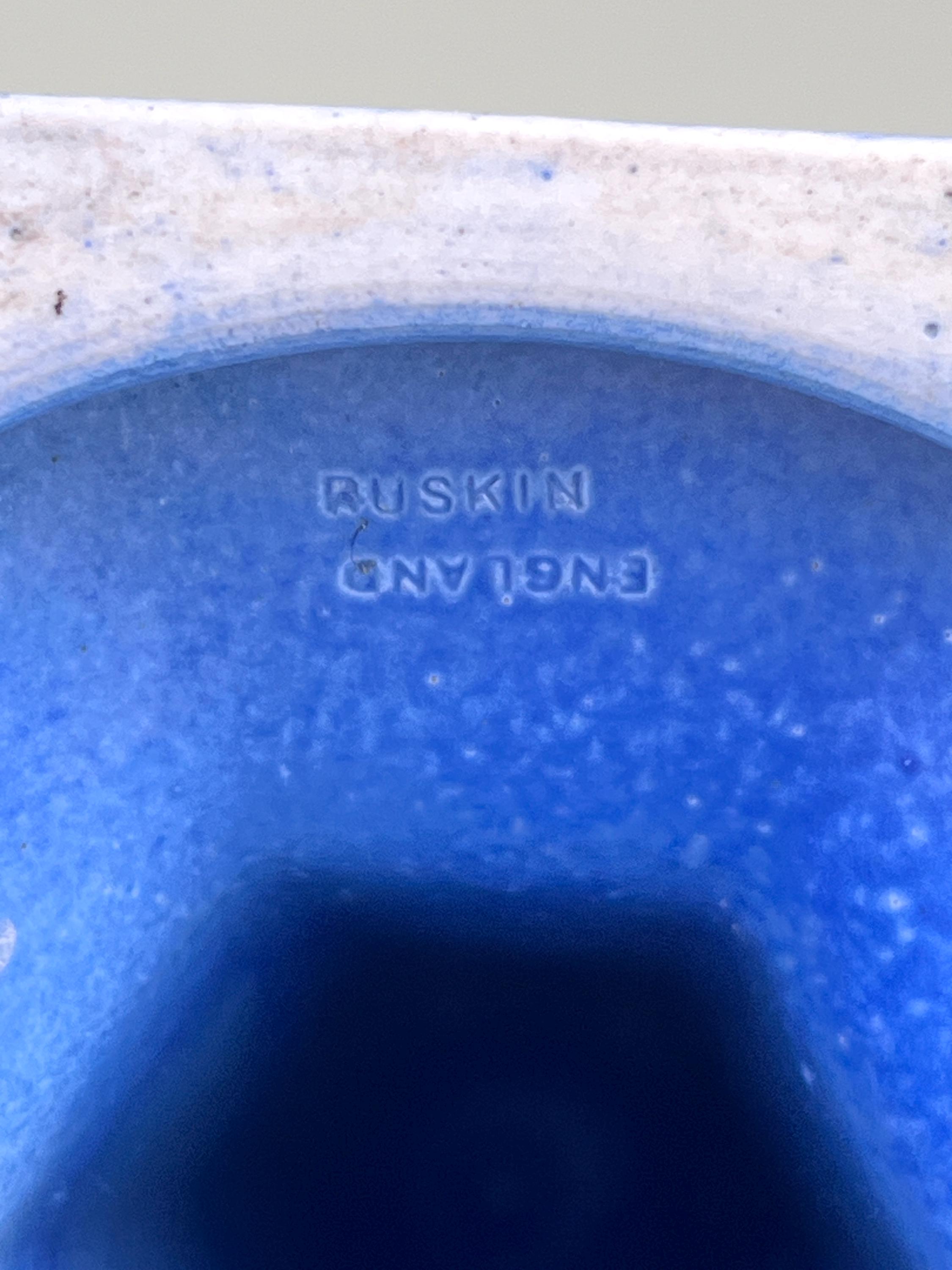
DetailsSet of 2 beautiful Ruskin candlesticks by Ruskin Pottery made of ceramic I Made in England I Signed
Fine 1930s Art Deco - RUSKIN POTTERY Candlestick hexagonal base - set of two
Made in England Signed
Weight: 850g
Height 20cm
width 11 cm
Depth 11 cm
Condition: very good used condition - see photos
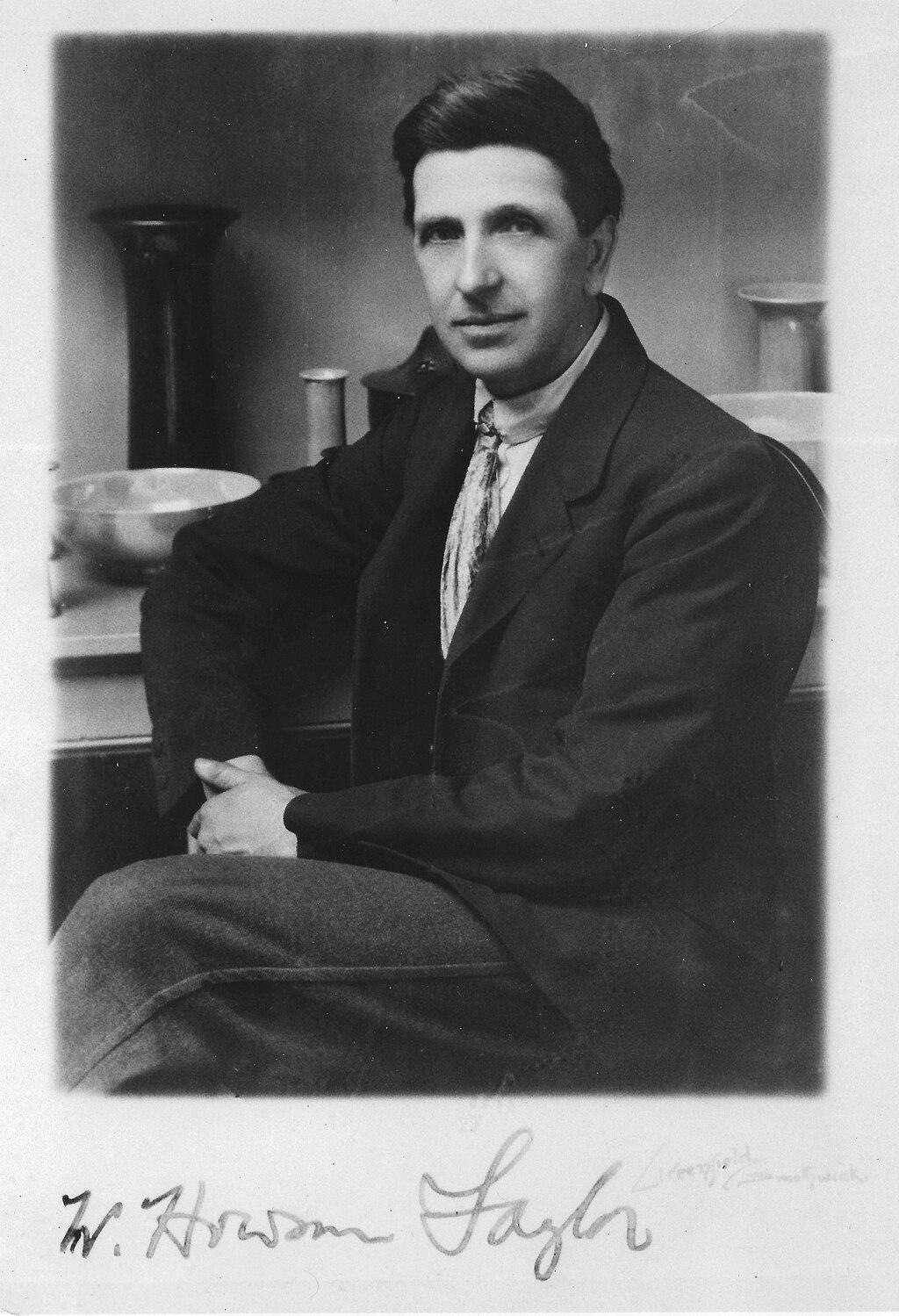
The Ruskin Pottery was an English pottery workshop founded in 1898 by Edward R. Taylor, the first principal of the Lincoln School of Art and the Birmingham School of Art, to be run by his son William Howson Taylor, a former pupil of the school. It was named after the artist, writer and social thinker John Ruskin because the Taylors agreed with and followed Ruskin's teachings. The pottery was located at 173-174 Oldbury Road, Smethwick, then in Staffordshire (now part of Sandwell, in the county of West Midlands).
The pottery produced featured innovative glazes used on a range of colourful pots, vases, buttons, bowls, tea sets and jewellery. The ceramic glazes developed by William Howson Taylor included misty soufflé glazes, ice crystal effect glazes - 'crystalline' -, lustre glazes resembling metallic finishes and the most prized sang-de-boeuf and flambé glazes which produce a blood-red effect. The sang-de-boeuf glazes were produced by reducing copper and iron oxides at high temperature. This difficult technique was first developed in China in the 13th century and reinvented by several potters in Europe in the late 19th century. William Howson Taylor was one of the main exponents of high firing techniques which produced a range of colours and unique 'craggy' glaze effects.
After exhibiting at art exhibitions both domestically and internationally, they gained recognition when they were awarded a "Grand Prize" at the St. Louis International Exhibition in 1904. Further awards followed at other international exhibitions, including Milan in 1906, Christchurch, New Zealand, in 1907, London in 1908, Brussels in 1910, Turin in 1911, and Ghent in 1913. -
Shipping & Policies
Related Products